CAD, FEA, CFD, predictive maintenance and custom part manufacturing. Aeronautical-grade rigor applied to manufacturing, automotive and construction.
Every service follows the same logic: real problem, rigorous technical method, measurable result.
Parts that don't fit in assembly, costly rework and suppliers that don't meet tolerances.
Parametric 3D modeling, manufacturing drawings with ISO tolerances and virtual assembly review.
Ready-to-manufacture drawings, parts that assemble without adjustments and complete technical documentation.
Components that fail in operation under real loads — with the downtime and rework cost that implies.
Finite element simulation (FEM) in ANSYS under static, dynamic and fatigue loads.
Critical points identified before manufacturing, extended service life and fewer field iterations.
Ducts with unquantified pressure losses, inefficient heat exchangers or internal flows with no visibility.
Simulation with ANSYS Fluent, parametric geometry analysis and validation of real operating conditions.
Optimized geometry before manufacturing — savings in energy, materials and field engineering hours.
Unplanned downtime, reactive diagnosis and costs that spike when equipment has already failed.
Technical inspection, vibration analysis and preventive plan by criticality level of each piece of equipment.
Failures detected before they occur, sustained availability and maintenance costs under control.
Out-of-catalogue parts, long import lead times or suppliers that don't guarantee tolerances.
Complete design + process selection + manufacturing supervision with dimensional control.
Part delivered to specification, with traceability documentation and agreed delivery time.
Slow production lines, frequent rework or process variability without identified root cause.
Process tolerance analysis, VSM, bottleneck identification and continuous improvement plan.
Reduction in cycle times and rework, with quality standards sustained over time.
The same technical methodology, adapted to the language and requirements of each sector.
Design and analysis of components for light vehicles, heavy transport and construction equipment. From structural brackets to suspension and transmission systems.
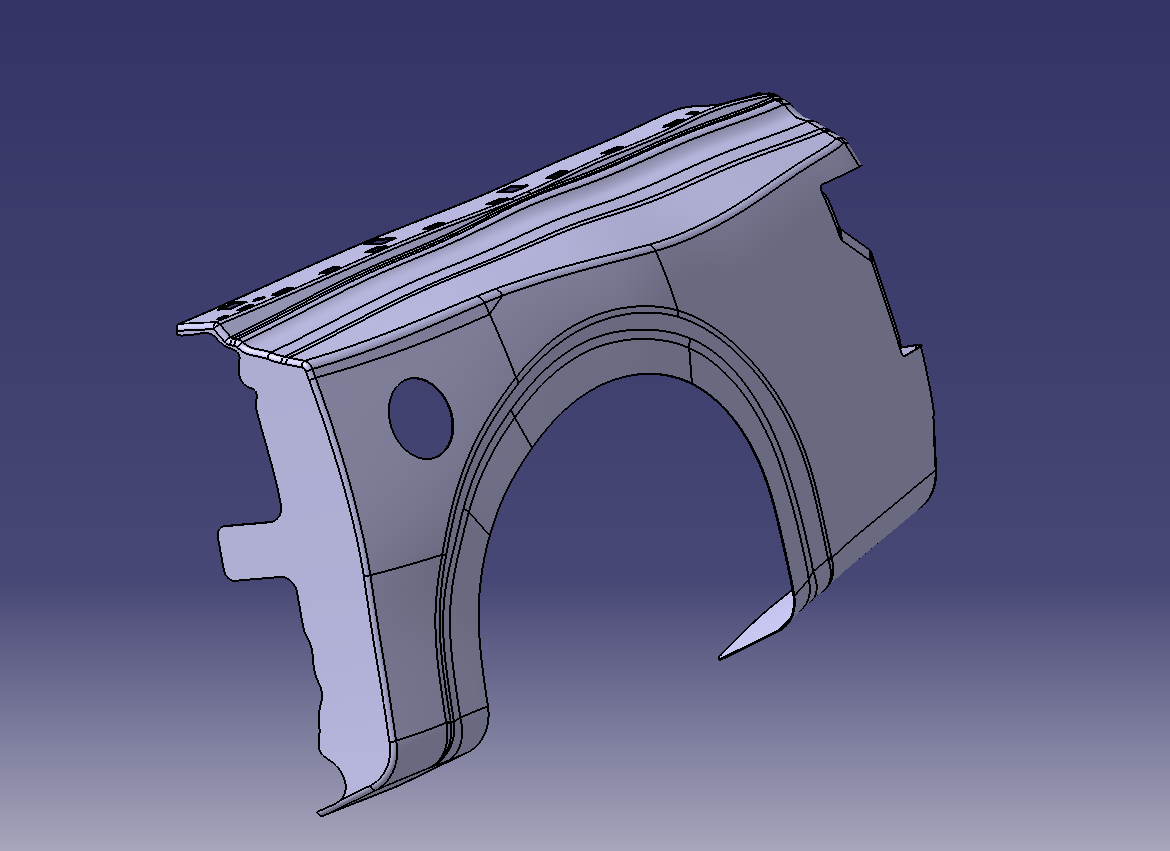
"For an enthusiast client in Lima, we structurally designed the rear fenders of a Ford Raptor in T700 carbon fiber — 4 inches wider than OEM — including FEA analysis and manufacturing planning."
Production line optimization, tooling design, machinery analysis and process improvement. We apply aeronautical engineering rigor to Peruvian industrial manufacturing.
"For an automotive textile cutting company, we redesigned the transmission system of a laser cutter whose belt failed at 3 hours — eliminating 2 operators from the process and recovering production cadence."
Structural analysis of metal elements, joint evaluation and technical consulting for infrastructure projects requiring independent engineering validation.
"Structural integrity analysis of metallic structures under dynamic load for infrastructure projects in Metropolitan Lima."
No black boxes. Each phase has a concrete deliverable and an explicit validation.
Collection of technical information about the problem: dimensions, materials, operating loads, failure history and engineering objective. No hiring commitment.
Technical document with the exact scope of work, proposed methodology (FEA/CFD/CAD), assumptions, deliverables and timeline. No fine print.
Execution of analysis with intermediate reviews. Parametric CAD models, FEA/CFD simulations with validated boundary conditions, and documented iterations.
Presentation of results with clear technical interpretation — not just data, but what it means and what decision it supports. Iterations until the result is actionable.
Final technical report, native model files, manufacturing drawings (if applicable) and implementation recommendations. Everything needed for the client's team to act without intermediaries.
No laboratory simulations. Projects executed with real clients in Lima, Peru.
A company cutting textile material for automotive carpets operated a laser cutter whose transmission belt could no longer sustain more than 3 continuous hours. The failure required two operators to maintain the machine manually, dropping the cadence from nearly 100 to just 40 pieces per shift. We redesigned the complete system: load analysis, chain and sprocket selection under industrial standards and calculation of the optimal transmission ratio to recover continuous operation. Results monitoring ongoing.
The Raptor's rear fenders needed to be 4 inches wider than the originals. We had a base mold that required significant modification to achieve the correct widening. We used our 3D scanners to precisely capture the real body geometry and our 3D printers to prototype and validate the mold modifications before moving to final carbon fiber fabrication — cutting lead times and ensuring the fit on the body was exact from the first part. The project is in active coordination with the workshop performing the vehicle's mechanical modifications.
The initial diagnosis is free and non-binding. We analyze the problem, tell you whether we can help and how, before any commercial proposal.